2007-07-21

The Tuninter 1153 ditching

Tuninter is a small airline company operating mostly within Tunisia with some short services to southern Europe. On 6 August 2005, flight Tuninter 1153 between Bari, IT and Jerba, TN, on board an ATR-72 aircraft crash-landed in the sea near the Sicilian coast of Italy. 16 of the 39 occupants died including 2 crew members. Tuninter got only two aircraft, the picture on this post shows the very same plane which crashed (Habib Bourguiba الحبيب بورقيبة). This is the first fatal accident in the history of Tunisian civilian air traffic since it started in 1948.

The Aviation Safety Network have a record for the accident. It seems like the aircraft was fitted with the wrong Fuel Quantity Indicator which was reading fuel quantities about 2000 Kg higher than the actual levels. The Fuel Quantity Indicators for both the ATR-42 and the ATR-72 looked the same and were fitted the same way, but used different algorithm to calculate the fuel level.

I know very little about the airline industry, but my basic engineer's guess tells me that such a critical subsystem should not leave room for confusion. Design common sense would suggest using as many common parts as possible across models to reduce manufacturing costs, but not when people's lives depend on them.

I recently found the 5-minute recording from the blackbox:


The conversation was a mix of Arabic, French, English and Italian. A blogger has published a transcript of the conversation. The mechanical engineer Chokri didn't make it, but the pilot survived although he was badly hit. A survivor said: "I saw the pilot on the wing. He was in a terrible state and blood covered his face."

Here is the same transcript with little corrections I made. The commander is Chafik Al Gharbi (شفيق الغربي), the second pilot it Ali Kebaier Lassoued (علي كبيّر الأسود).

Hours 15,34' 33"
- commander: check whether it started. Leave it, leave it.. in the name of God, most compassionate, most merciful. What's the ditching procedure?
- second pilot: [incomprehensible] (with Palermo air traffic control)
- commander: confirm the distance, please.
- Palermo control: [incomprehensible]
- commander: confirm the distance, please.
- Palermo: the distance is now 20 miles.
- commander: I think… we are not able, we are not able to reach the terrain. We are at four thousand feet and we are not able, we loose both engines. Can you send for us helicopters or something like that?
- second pilot: ditching.. ditching (talking to self while going through the procedures manual)
- commander: fast, fast.
- Palermo: I can advise.
- second pilot: preparation. . Cabin crew: notify. Sign: on. DPWVS: off. Set it to off there. Cabin and cockpit door: prepare.(reads out loud the ditching procedure)

3'33" to the splash down
- commander: it's better we turn towards that ship, it's better if we turn towards that ship.
- second pilot: should I put [incomprehensible], no?
- commander: no, no, the wind is strong, the wind is strong. Oh! God be clement. In name of God the merciful one, the clement one, in name of God, the merciful one, the clement one...
- second pilot: cabin and cockpit: prepare.
- commander: so this one still doesn't start?
- second pilot: no, it refuses to start.
- Palermo: 1153, Palermo, be informed that we informed ... the ships... Your position is about 22 miles now radial 20… 036,… radial 036, 22 miles.
- commander: uhhh, the battery! Unable, unable to reach, 2200 feet. There are two boats, we are going to join them, left side, heading 180, can you call them please?
- commander: try again, try again (trying to restart the engines)
- Palermo: heading 180, confirmed?
- commander: which one have you ignited, which you have ignited? (stressed tone)
- second pilot: the right one.
- commander: go, go. The other one, the other one!
- second pilot: already did, it refuses to start!
- Palermo: Tuninter 1153, Palermo, say again!
- commander: there is a boat, there is a boat… left side… I'm going to put there. 1100 feet. In the name of God the merciful one, the clement one.
- second pilot: auto, press, dump.
- commander: prepare for emergency ditching.

Less than 1' 55" to the ditching
- Palermo: you are at about… now the position is approximately… 20 miles to east of the field
- commander: Unable to reach, unable to reach
- second pilot: not in a position to reach land. Tuninter 1153 unable to reach the field, we see two ships on the left side, big boats. We try to land… to ditch near of them. If you can call them, please…
- Palermo: [incomprehensible]….we call the military.
- second pilot: before ditching. Optimal ditch altitude. Minimise impact slope. Brace for impact (reads out the ditching procedure)
- commander: good
- second pilot: [incomprehensible] (reads on, seems nervous)
- commander: did it start? try the other one

Less than 27" to the ditching
- commander: is that the sound of the engine?
- second pilot: the same, the same, it does not want to make anything
- commander: God be clement, God be clement
- second pilot: gear level… up… ditch push button before.
- commander: go, it's over now, help me Ali. Be alert Ali. Chokri, get ready, Chokri get ready.
- Chokri: I am ready
- commander: we're touching the sea.
- commander: in the name of God the merciful one, the clement one, in the name of God the merciful one, the clement one

Splash-down hours 15,38' 53"

2006-12-29

Recent readings: Orientalism

Edward Said is an American academic, he was born in Palestine and lived in Egypt for some time before immigrating to the United States.

Orientalism is a classic that Said had put with great care, the book had simply changed the way the West looks at the "Orient". It had even created a negative tone to the word "orientalism", modern western scholars are apparently distancing themselves from being called "orientalists".

The book re-examines the term "orient" and what it actually means to the Western reader, or maybe what it was made to mean to the Western reader. Orientalism argues that the West actually made its own Orient and that the Orient as know in the West is actually the Western discourse about it.

To illustrate the idea, Said gives as an example the way Orientalists made their "scholarly" analysis of the revolutions and rebellions against the colonial rule in Africa and Asia. For instance, in their analysis of the Arab revolt in Egypt, some Orientalists gave the impression that the Arab "violence", is somehow due to inherent tendencies to chaos rather than to legitimate pursuit of freedom and independence. Colonialism needed to be justified with orientalist theories like "Arabs/Africans/Indians are incapable of self-governance".

The book goes through the representations of the Orient since medieval times, this was essentially anti-Islam rant fuelled by the religious authorities in Europe. Said spends a good part of the book describing the orientalism of colonial times which is the period when "Oriental Studies" in Europe became of great importance to the colonial mouvements in Britain, France, Belgium, Germany and others. Indeed, one of the most central ideas in "Orientalism" is that the orientalists were essentially serving the colonial interests. Some critics blame Said for ignoring other orientalists who were not affiliated with colonial authorities and seemed to be solely interested into Oriental arts for instance. Mahmoud Darwish put this in his stunning beautiful symbolic style in a poem called Tibak (طباق):

نيويورك. إدوارد يصحو على كسل الفجر

يعزف لحناً لموتسارت

يركض في ملعب التِنِس الجامعيِّ.

يفكِّر في رحلة الفكر عبر الحدود

وفوق الحواجز

يقرأ نيويورك تايمز

يكتب تعليقَهُ المتوتِّر

يلعن مستشرقاً

يُرْشِدُ الجنرالَ الى نقطة الضعف في قلب شرقيّةٍ

يستحمُّ. ويختارُ بَدْلَتَهُ بأناقةِ دِيكٍ

ويشربُ قهوتَهُ بالحليب

ويصرخ بالفجر: لا تتلكأ

Orientalism, just like Said described, is still alive and well. Bernard Lewis, a British now living in the US is probably the best example of Said's orientalists. Despite his strong disagreement with Said, Lewis is regarded as a major figure of modern Middle Eastern studies. When Lewis justified the war in Iraq with "we free them or they destroy us", he summarised what Said has been trying to tell us in his book.

Despite my disagreement with some of Lewis analysis, I think his extensive research may give the Muslim world some very useful clues on how to regain more status and accelerate development. I will try to make my next politico-historical reading a Lewis.

2006-09-30

A Tunisian in the church

I have been living in Western countries for a few years now and I have never attended a mass, at a Christian church that is. Actually, I have been living close to several churches in Tunis for a decade and I always thought of visiting the Roman Catholic church in avenue Habib Bourguiba. It never happened for lack of time, lack of determination and mostly for the fear that it may appear inappropriate to the local Christians.

I talked about this to a co-worker and he invited me to attend the mass at the Guildford Saint Saviour's church which I did (with my wife) on 26 February 2006. It was a very worthwhile experience and I'd love to have it again.

To a muslim, the prayer ritual is obviously quite different. It consisted into a considerable amount of singing and music playing which would correspond more to a joyful adhkar (أذكار) session in the Islamic tradition. The person leading the prayer gave a speech about Jonas, that's Yunus (يونس) in Arabic. Except from the mention of the Trinity in the lyrics, I didn't see much conflicting with the Islamic teachings.

The common belief that muslims cannot pray at a church or at synagogue is not totally accurate. When Syria was conquered by Muslims in the 7th century, Christians and Muslims were praying at the same church (Saint John maybe) alternating services on Fridays and Sundays. Later when Omar Ibn Al-Khattab (عمر إبن الخطاب) conquered Jerusalem (القدس), he commanded that muslims shall not pray in Christian worship places for fear that it may establish a tradition of possessing churches in the future.

It happened the day of my visit that the church was ogranising a kind of informal meeting to discuss about "Is nothing sacred?". Assured by the ones who invited me, I attended; the discussions addressed several topics like some show I didn't know about but which appeared to be blasphemous, the muslims reaction to the Danish cartoons and so on. At the very end, I asked permission to comment on a question by one of the attendees: "do Muslims take their religion more seriously than us?" and (briefly) on the Danish cartoons affair.

My point of view was essentially that for muslims Islam has been a power that brought scientific, social, military and economical advances and it's still being regarded as the social system that turned a bunch of desert warring tribes into masters of the World. Islamic Civilisation owes all of its achievements to Islam, therefore, I think this is why the Islamic religion has this great esteem for Muslims. The US channel PBS used a nice expression to describe this: Islam -- Empire of Faith, it's a documentary which runs over 3 episodes: The Messenger, The Awakening and The Ottomans.

The Christian church in the West, on the other hand, was more regarded as an obstacle to Western advances. Tales of blasphemy charges against scientists are still vivid in the minds and I believe that this has costed the church a lot of credibility over the past centuries. That's obviously the opinion of someone who knows very little about the history of Christian church(es).

The Danish cartoons affair deserves a post by itself, but at the church I only pointed out that the violence the media has described happened in inherently violent and instable places, namely Gaza, Palestine, Nigeria, Pakistan and such. The cartoons were a mere trigger for communities already under tension.

The reactions to my visit were mixed, someone from the church's staff said that what I did was "brave", another attendee was staring at us for the whole session and gave the impression that he didn't like us being there. Many others expressed sympathy and escorted us on the way out, some even asked us to come again. Thank you all for the warm welcome.

2006-08-26

Childhood comics: Sinan - سنان

Sinan was one of the comics that marked the childhood of millions in the Arab World. My sister had a Sinan T-shirt when she was about 4. It's one of these comics made in the 70's and, very successfully, translated to Arabic. The translation of these Japanese anime is usually done in Syrian and Lebanese studios; Young Future and Space Toons are names that come to mind. I believe that Sinan's English name is Beaver.

The opening song is still vivid in my mind 25 years later, it goes like..

سنان يا سنان
يا خير الأصدقاء
في الغابة الخضراء
سنان يا سنان

شعارك الوفاء
يا خير الأصدقاء
ها نحن بإنتظارك
سنان يا سنان

سنان يا سنان
يا نفحة النسيم
بطبعك الكريم
سنان يا سنان
و رأيك الحكيم
يا خير الأصدقاء
ها نحن بإنتظارك
سنان يا سنان

سنان يا سنان
صديقنا الأمين
في غابة الحلوين
سنان يا سنان
الكل سالمين
يا خير الأصدقاء
ها نحن بإنتظارك
سنان يا سنان

The closing song, equally beautiful, goes like..

ما أحلى أن نعيش
في خير و سلام
ما أحلى أن نكون
في حب و وئام

لا شر يؤذينا
لا ظلم يؤذينا
و الدنيا تبقى تبقى
آمال للجميع

ما أحلى أن نعيش
في بيت واحد
ما أحلى أن نكون
في وطن واحد
الحب للجميع
و الخير للجميع

Sinan was a very brave young squirrel who always helped the needy and did all he could to bring happiness and joy to those in sadness. Every episode would address a typical social situation, no guns, no flying robots, just plain goodness and big-hearted behaviour. Sinan was supported by his friends Lala and a young bear (forgot the name). The bad guys were a gang of Foufou the fox and Farfour the bear, led by Sharshoor the wolf. The Sharshoor gang were not terribly bad, they were just a bunch of idiots giving Sinan a hard time.

I really cannot make any sense of the "modern" comics a la Pokemon, I just can't get the point.. or is it just me growing too old?

2006-02-01

United Kingdom -- First impressions

We have been in Great Britain for about 10 months now and I thought I should write down some of my first impressions about this place. This is definitely not pretending to be a scientific evaluation, but a mere side scratches of a newcomer. It's also worth noting that we only saw part of the South West (Surrey) which seems to be in a more favourable situation than the rest of the country.

The name
It's still a bit confusing for me to make a clear distinction between Britain, Great Britain, England and the United Kingdom. It seems like the official name is "United Kingdom" although the top-level Internet domain name for this country is actually GB (and not UK) as per ISO 3166. England seems to be used to indicate the largest island.

Food
Food was probably the most noticeable difference for me. The British seem to heavily consume ready-made and frozen meals, grocery stores contain huge sections of this type of food. The "hot food section" is usually a tiny corner that the shopper can barely spot, hot food is almost synonymous with roast chicken. The national junk food is fish and chips which is usually a portion of deep-fried, breaded Cod fish with potato fries.
The other significant food in the UK is alcohol, it seems to be an integral part of the social life and there are shops dedicated to nothing but selling beer, wine and spirits. It's very common that people head to the pub (bar) right after work, everyday at times.

"Bloody"
This seems to be the term to use to express anger while avoiding vulgar expressions. It appears to be socially acceptable.

Transportation
A very good roads network. The underground service is well-designed and reliable. There's a problem with the cost though; parking is very expensive at several GBP per day, gas is at an average of 0.90 GBP per litre and diesel is usually a little more expensive than gas. Trains tend, apparently for safety reasons, to run slower then in other European countries, a round-trip from Guildford to Cambridge costs about 36 GBP which is, by Tunisian standards, a lot.

Health Services
The National Health Service (NHS) is the public authority running the Government's health services. The state is controlling almost all aspects of health care, patients need to register with a local General Practitioner (GP) who coordinates all their health service needs. The first general impressions are not very positive so far, but we had a very good experience with the emergency service.

Queueing
Fellow Tunisians have a lot to learn from the British on this matter, everyone queues, everywhere.

Urban organisation
All buildings look exactly the same: red-brick walls with tiny rooms and really tight doors, I often wonder how they could take sofas inside the house. Actually, whe I moved I shipped a 3-seater sofa to my address in the UK, unfortunately I had to sell the item on e-Bay (for a fraction of the price) because I simply couldn't take it upstairs. Some modern buildings tend to use more metal and glass. Roads are usually a bit tight compared to Dubai or the US. Some of the roads suffer a little damage, clearly because of rain water.

Media
The Independent is my preferred newspaper. I don't have exposure to many popular TV channels, I only receive five of them. I listen to BBC 4 Radio daily and I find it great, Radio Tunis has to do a lot of restructuring to reach this high standard; too much music has exactly zero informational value.
The British media has the particularity of being shocking without turning politically incorrect. Showing body liquids and extreme nudity on TV is somehow a form of joking here and I recall seeing postcards with human genitals in London. I find it an interesting form of humour. Some say that the British were shocked so many times that they hardly find anything shocking.

No middle finger
Extending the middle finger as a vulgar sign of extreme offense does not work in Britain. The British express the same by extending both middle fingers of the same hand (the ones closest to the thumb). The legend says that in earlier times, when British archers were captured by the French, they had their fingers chopped, at least the ones used to throw arrows. Therefore, showing off the fingers is used as a sign of defiance.

2005-12-04

Recent readings: Léon l'Africain

I'm starting off this new section to do a very rough review of books I read lately. There has been some time since I didn't read sustainably.

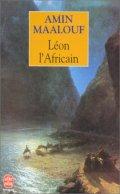
The first book in this series is Léon l'Africain by Amin Maalouf (أمين معلوف) or "Leo Africanus" (الأسد الإفريقي). I have read the original version in French.

Amin Maalouf is a Lebanese novelist living in France. He has covered in a very elegant style the West's relationship with Islam, Muslims and the Islamo-Arabic civilisation in general.

In Léon l'Africain, Amin Maalouf depicts the life of a genuine figure of the 15th-16th century: Hassan Al Wazzan (حسان الوزان) or, maybe, (حسن الوزان) known to the West as Jean-Léon de Médicis, the geograph. Hassan was born in Granada (غرناطة) in modern day Spain, he moved to Morocco as part of the massive Muslims and Jews migration after the Inquisition.

Hassan gets elevated in the ranks of society and becomes a minister/ambassador to the ruler, he visits Timbuktu, Mali which was a very developed and prosperous city at the time. His childhood friend goes into a rebellion movement and their ways cross in fantastic ways.

A quick journey to Tunis, Tunisia, then a trip to Constantinopole and a settlement in Cairo, Egypt. From Egypt, he travels back to Tunisia fearing the Ottomans, but gets abducted in Jerba, Tunisia by Sicilian pirates to end up between the hands of the Leo (Leon) X, the Pope in Rome, Italy.

Hassan Al Wazzan told us about the stressful last days of Granada and the mood of dispair that was established, the news of Jews being burnt alive in other districts was to tell Granada Jews and Muslims alike they were next. In all this, there was the voice of Astaghfirullah, who was always there to remind the city of what they did wrong and that they were getting what they deserved. Reading through the chapter, you'd find that Astaghfirullah was, somehow, th e same voice that we hear today but prefer not to listen to.

The life of Hassan Al Wazzan was used by Amin Maalouf to tell the story of so much happening in (today's) Spain, France, Italy, Egypt, Mali, Morocco, Algeria, Tunisia and Turkey. This fantastic tale of a figure that lived in the West and in the East is very captivating and Amin Maalouf made it hard for the reader to halt for a pause.

2005-10-12

The Passions of the Christ

I saw The Passions of the Christ about two weeks ago and it was quite a different kind of movie. It seems like Mel Gibson became an expert in illustrating pain, sacrifice and suffering.

I'm not proficient in theology, but the story of Jesus (PBUH) as described by the movie was exactly what I have learnt about the matter in the Islamic tradition. The fundamental difference is of course on the notion of Jesus (PBUH) himself; Islam, categorically and by definition of God, refuses the idea of a "son of God".

The movie used the original Aramaic language spoken by Jesus (peace be upon him) and I discovered it was so close to modern Arabic. Well it was not really a surprise since it's just another semetic language like Hebrew and Arabic. What was suprising though was the striking similarity: with careful scrutiny, an Arabic (and for the matter maybe also a Hebrew) speaker can probably recognise 40% of what they were saying.


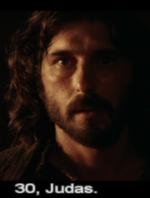
In the beginning of the movie there is a discussion between Judas and some Jewish clerics where they say "thlatheen, yehouda" that is "30, Judas". Arabic for this is "ثلاثين، يهودا" which reads exactly the same.

In Aramaic, Jesus (PBUH) seems to be called "Yeshua". His name in Arabic Yesou' "يسوع". I should acknowledge that I still don't know the diffrence between Issa (عيسى) and Yessou', a commentator may have the nicety to clarify.

Other examples are: sallo (pray/صلوا), malou (what's wrong with him/ماله), beini ou beinek (between me and you/بيني و بينك), la (no/لا), man abak (who is your father/من أباك), ana howa (I am he/أنا هو), koum (get up/قم), akhdhou al akh (they seized him "the brother"/أخذوا الأخ).

I had some discussions with some Christian friends and they appear to believe firmly that Muslim's God is different from theirs, stressing the fact that it's called "Allah".

What many seem to ignore is that Allah or Al-lah (الله) is just Arabic for "The God", therefore "my God" is Arabic for Ilahi (إلهي). Around the end of the movie, Jesus (PBUH) looks up the sky and screams for God's help saying: "Ilahi!".. I hope you got the point by now.

2005-10-03

Italian influence in Tunisian spoken Arabic

Very few Tunisians realise this, but quite a few words of our spoken dialect of Arabic come from Italian, not Arabic nor French. Of course we use French words, but when we do we know it's French, but many of the words below are regarded as authentic Tunisian terms.

Italians have been to Tunisia several times: in the 2nd century BC as conquerors, in the 17th and the 18th centuries as immigrants and in the 20th as tourists. When the French protectorate started in 1881, there were 12000 Italians and only 700 French in Tunisia (*). The number of Italians grew to 85000 in 1921. The French protectorate turned into full scale colonisation, but that's another story.

As Italians came in fleeing oppression and poverty, they were well perceived by the population and quickly got fully integrated. In contrast, French came in as colonials and maintained an oppressive attitude. Well, that was occupation, so no wonders here.

Here is a list of words which were doubly verified by my wife and myself using BabelFish and an actual Italian national (thanks Ezio). I'm listing the Arabic term as pronounced by Tunisians, the Italian word, the English translation of the Italian word and the Arabic translation of the Tunisian term.

armatoura/armatura/armor/درع
zanzana/zanzara/bee/نحلة
farfattou/farfalla/butterfly/فراشة
feeshta/festa/festivity/عطلة
jornata/giornata/daily salary/أجر يومي
fatcha/faccia/face/وجه
ratsa/razza/race/عرق
mizirya/miseria/misery/فقر
sigaro/sigaro/cigarette/سيجارة
bousta/busta/postal pack/طرد
shroubo/sciroppo/sweet drink/شراب
trino/treno/train/قطار
makina/macchina/car/آلة
qwattro/quadro/frame/إطار
cougina/cucina/kitchen/مطبخ
gatt,gattous/gatto/cat/قط
tassa/tazza/cup/كأس
sabbat/ciabatta/shoes/حذاء
calcitta/calze/socks/جوارب
babbaghayou/pappagallo/parrot/ببغاء
coubirta/coperta/cover/غطاء
carrita/carretto/carriage/عربة
guirra/guerra/war/حرب
bala/pela/shovel/رفش
forshita/forchetta/fork/فرشاة
blassa/piazza/place/مكان
basta/basta/enough/كفاية
stamba/stampa/printer/آلة كاتبة
cabbout/cappotto/coat/معطف
soubia/seppia/octopussy/قرنيط
jilat/gelato/ice cream/مثلجات
rouba fikia/roba vecchia/ملابس قديمة
gazouza/gassosa/gaseous drink/مشروب غازي

It goes without saying that I'm no linguist and no historian, these are just notes from what's surrounding me. Any additions or comments are welcome.

--
(*) المغرب العربي و الإستعمار الفرنسي، نور الدين الدقي 1997

2005-09-24

Processors of glory

In 1994 (I believe), I had my first encounter with Unix: it was a glorifying presentation of dg-ux by a DataGeneral person, DataGeneral were attending SIB'94 with MASH (Maison Arabe de Software et Hardware). The second time was a brief presentation by a TBM (Tunisian Business Machines) sales person about IBM Aix at the same event in 1995. I started thinking that operating systems running the heavy duty tasks cannot be related in anyway to MS DOS on which I was still having a hard time allocating more than 64 KB. That's when I started contemplating Unix as "the real and true operating system".

Today, I still regard "Unix the concept" as a great technological achievement, but I have a lot lower impression of the way the industry commercialised it. The latter notwithstanding, I managed to collect some of the symbols the Unix golden era: the processors made to run Unix.


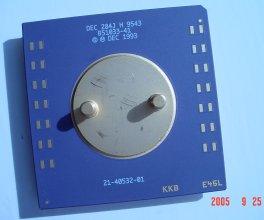
This one above is an Alpha 21064 taken from an AlphaStation 200 4/166, it's a RISC processor. Alpha's were made by Digital which was acquired by Compaq, which at its turn merged with hp. Digital is also known as DEC (Digital Equipment Corporation), they made the PDP11, maybe the most famous machine to run Unix.

Several versions of Digital Unix ran on this chip: OSF/1, Ultrix and True64. I still cannot tell the relationship between all three. There's a Linux port (architecture name "alpha" or "axp") to Alpha, actually Alpha was the first non-x86 platform on which Linux ran. Red Hat and SuSE had (now discontinued) distributions for Alpha, Debian still has a maintained port.

I remember reading in Communications of the ACM a story about Robert Metcalfe who, in the 70's, got a research grant from Digital in the form of a PDP8 system. The PDP8 was relatively a medium sized machine by the time's standards. Somehow, the system got stolen from the lab and Metcalfe had to call Digital in panic expecting them to storm the place with flocks of cops, but to his astonishment, Digital visited the lab with their Public Relations staff and started an advertising campaign named: "PDP8: the first computer small enough to be stolen".

There is no doubt that Digital has always been a shrine in the eyes of computer engineers throughout the 70's and 80's representing an example of great engineering and shaping a part of the computing history.


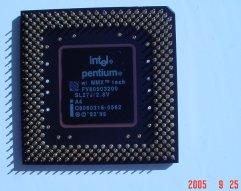
This is the Intel Pentium. Well, it was not really made to run Unix, although some of its predecessors did run some early commercial versions of Unix, namely Microsoft Xenix and SCO Unix.

Curiously, modern Linux versions are spreading very well on machines with this chip. It's definitely the most widely deployed architecture of personal computing these days. Intel is moving to the 64 bit arena with the Itanium, but after some time they got it: the Itanium was too intrusive for the industry: it requires new motherboards, new BIOS and new everything. The EM64T, apparently copied from an AMD initiative, was way more acceptable and was absorbed much easier by consumers.


This is the hp PA-RISC, PA as in Precision Architecture. This RISC chip had some outstanding floating point performance compared to its competitors. hp-ux is probably the only Unix to run on this chip in production sites, there's a Linux port (architecture name "hppa" or "parisc") but I think only Debian are maintaining a distribution for it. The last time I saw a Linux "booting" on a PA was in 1999 when I tested the boot code on a hp 9000/715. The 9000 series are the PA-RISC based hp systems, the 800 series are servers and the 700 series are workstations, or so it seems to me. hp are apparently slowly dropping this processor and replacing it with the Itanium.


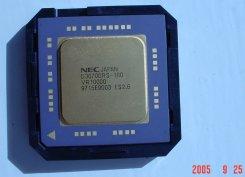
This is the MIPS R10000 taken from an SGI Origin 200. I was under the impression that SGI were the only users of this chip. It seems like it has some significant wide-spread in embedded devices, Cisco routers and hp printers run on MIPS for instance. The most popular Unix to run on this chip is the SGI Irix, there's a Linux port which doesn't seem to be very popular. I think only Debian maintains a Linux distribution.


This Sun Sparc processor was taken from a SparcStation 2, Sun (the Stanford University Network) started in early 80's. They, like many other Unix vendors, started using Motorola 680x0 then started their own chip business. The nice thing about this is that Sun created an independent organisation to develop the Sparc platfrom so today you can buy a Sparc system from Fujitsu Siemens for example. The primary operating system running on these is obviously Sun Solaris (formerly SunOS), and it's still the largest deployed commercial Unix version. A Linux port (architecture name "sparc" and "sparc64") exists since the late 90's, Red Hat and SuSE had Linux distributions for Sparc but they were discontinued at versions 6.2 for Red Hat and 7.3 for SuSE. Debian still maintains a Sparc port.
I'm certainly missing some important pieces in my collection, namley: IBM PowerPC, Motorola 680x0 and Intel Itanium. I have an extra MIPS R10000 which I'm willing to exchange for a PowerPC, an ARM, an Opteron, a 680x0 or anything with historical value.